
Procedures
Roux-en-Y Gastric Bypass
Gastric bypass creates a small stomach pouch and connects it directly to the small intestine. It changes how much you can eat at once and it changes the hormonal signals that control hunger and blood sugar. It is one of the longest studied metabolic operations.
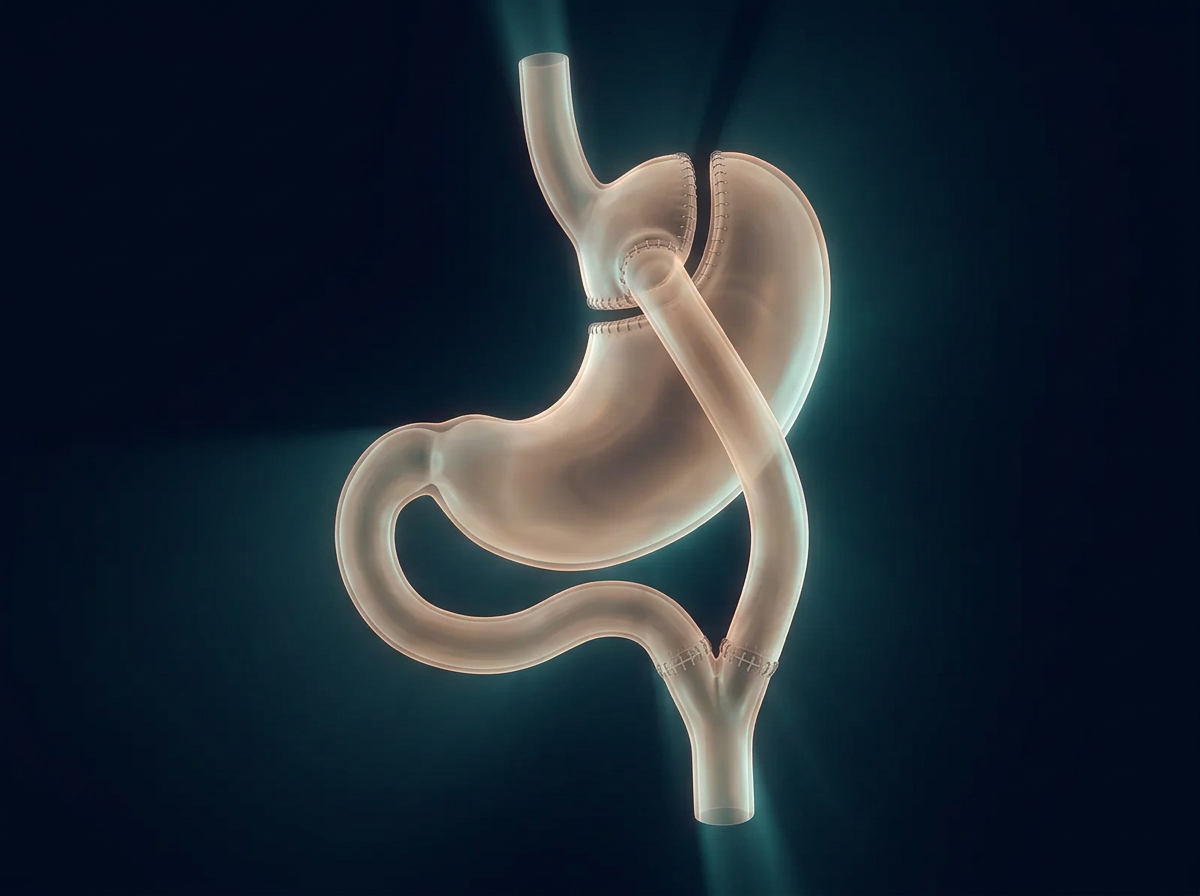
What the operation does
A small pouch is created at the top of the stomach, about the size of an egg. The small intestine is divided, and one end is brought up and connected to that pouch. The remaining limb is reconnected further downstream, which is where the Y shape in the name comes from.
Food now passes from the pouch into the small intestine directly. The rest of the stomach and the first part of the small intestine stay in place and keep producing digestive juices, they are simply bypassed by the food.
The hormonal part is why blood sugar often improves before much change on the scale has happened at all.
Who it tends to suit
Gastric bypass is often discussed for people with type 2 diabetes, because the effect on blood sugar is strong and well documented. It is also discussed for people with significant reflux disease, because rerouting the path food takes can address reflux directly.
It is not decided by a single number. Your metabolic picture, your medical history, your prior abdominal surgery, your medications, and what you want out of treatment all go into the decision.
Sleeve gastrectomy and bypass are both good operations. They are not interchangeable, and the right one for you depends on facts about you, not on which is more common.
- An inadequate response to a previous metabolic procedure
- Metabolic disease where the strongest available effect is the goal
The evaluation comes first
Nothing is scheduled before the workup is complete. That means a full history, a medication review including any GLP-1 therapy, metabolic laboratory work, and upper endoscopy to look at the stomach and esophagus directly.
Nutrition consultation happens before the operation, not after. So does a frank conversation about what the operation can and cannot do.
Recovery and follow-up
This is an inpatient operation, usually done through small incisions. You get specific instructions about eating and drinking before and after, and the diet advances in stages over several weeks.
Follow-up is not optional and it is not short. Vitamin and mineral absorption changes permanently after bypass, so lifelong supplementation and periodic laboratory testing are part of the operation, not an afterthought. Long-term follow-up continues here.
Common questions
- Is gastric bypass reversible?
- It is technically possible to reverse, but it is a major operation to undo and it is not treated as a routine option. Plan on it being permanent.
- How is it different from a sleeve?
- A sleeve removes part of the stomach and leaves the intestinal path unchanged. A bypass leaves the stomach in place but reroutes food past most of it and past the first part of the small intestine.
- Will it help my reflux?
- It may improve reflux, which is one reason it is considered when reflux and metabolic disease occur together.
- Do I have to take vitamins forever?
- Yes. Absorption changes permanently, so daily supplementation and regular laboratory checks are lifelong parts of the plan.
Related procedures and conditions
Next step
We start with an evaluation, not with an operation.
Request for InformationLast reviewed