
Procedures
LINX Device for Reflux
An anti-reflux option that reinforces the barrier between the stomach and the esophagus with a small, flexible ring of magnetic beads. It is an alternative to a fundoplication.
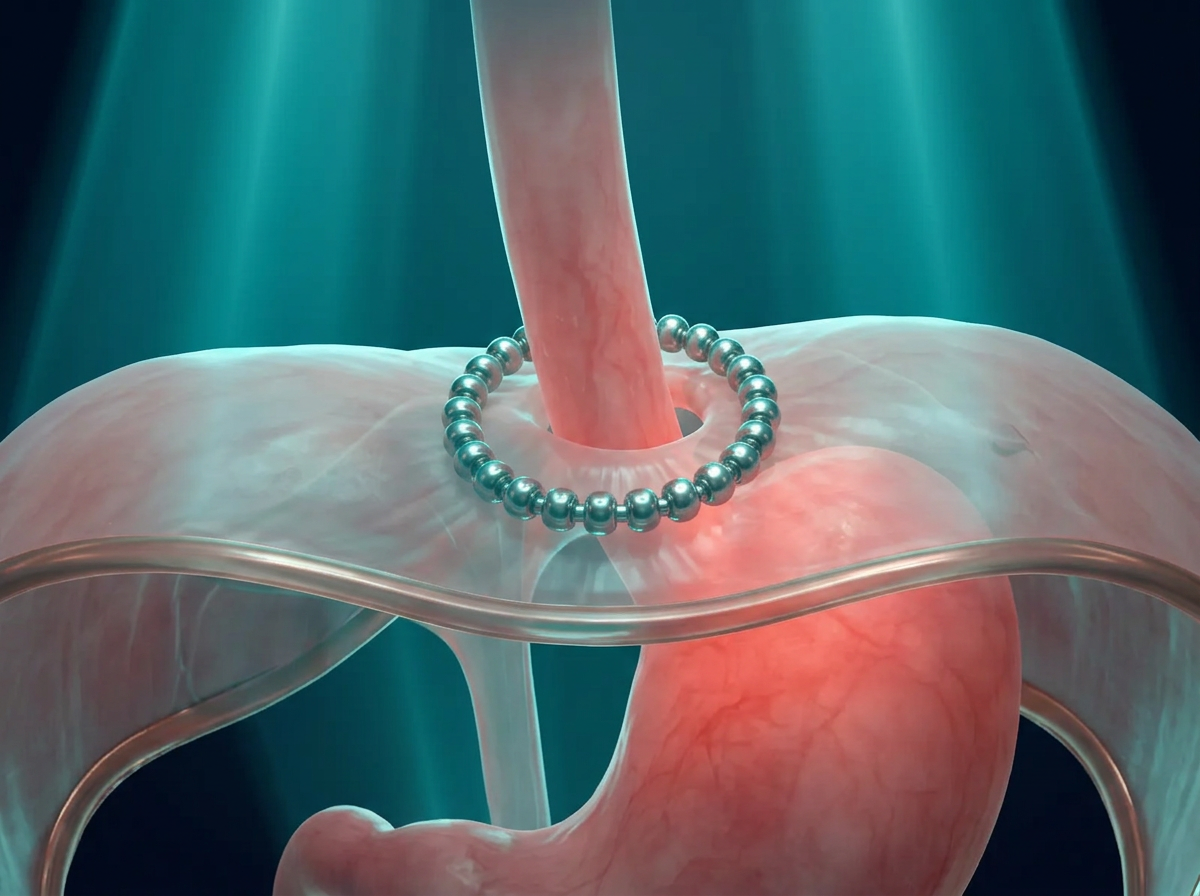
What a LINX device is
A LINX device is an anti-reflux device placed where the lower esophagus meets the upper stomach. It is a small, flexible ring of titanium beads with magnetic cores. The magnetic attraction between the beads helps keep the valve closed, reinforcing the barrier between the stomach and the esophagus so stomach contents do not wash back up.
When you swallow, the food or liquid gently separates the beads so it can pass, and then the ring closes again. The stomach is not wrapped and nothing is removed.
When it is considered
Many people whose reflux needs surgery have a hiatal hernia. The hernia repair closes the opening in the diaphragm. The anti-reflux part of the operation then restores the valve, either with a fundoplication, where the top of the stomach is wrapped around the lower esophagus, or with a LINX device.
Unless there is a clear medical reason to choose one over the other, the patient can often choose. Some people prefer not to have a device. Others prefer not to have the stomach wrapped. Both are reasonable, and that conversation is part of the evaluation.
Testing comes first
Upper endoscopy, a pH study, and esophageal manometry show whether reflux is the problem and whether the esophagus moves well enough for a repair.
LINX is not right for everyone, including people with certain metal allergies or esophageal motility problems. People with a LINX device can have MRI scans only under specific conditions, so if you may need MRI in the future, that is part of the conversation. The evaluation determines whether it fits.
What to expect
Before. The full reflux workup and a conversation about fundoplication and LINX.
The day of. The device is placed through small incisions using robotic technology, often together with a hiatal hernia repair. The procedure is performed under anesthesia. The anesthesia team will discuss expected comfort, awareness, recovery, and risks with you.
After. Early on, eating small amounts often is usually recommended. Some temporary difficulty swallowing can occur while healing. Follow-up checks your swallowing and your symptoms.
This page is educational information, not medical advice. What is right for you is decided in consultation, after a review of your history, your symptoms, and your testing.
Common questions
- Is LINX a replacement for fundoplication?
- It is an alternative. Both restore the valve between the esophagus and the stomach. Which one fits depends on your testing, your anatomy, and your preference.
- Can a LINX device be removed?
- Yes. It can be removed if needed, although that is another procedure.
- Does testing still come first?
- Yes. Every anti-reflux plan starts with the evaluation.
Related procedures and conditions
Next step
Testing decides which options are appropriate.
Ask about reflux treatment optionsLast reviewed