
Procedures
Robotic Sleeve Gastrectomy
Sleeve gastrectomy is currently the most commonly performed metabolic operation, treating metabolic disease in addition to decreasing a patient's weight.
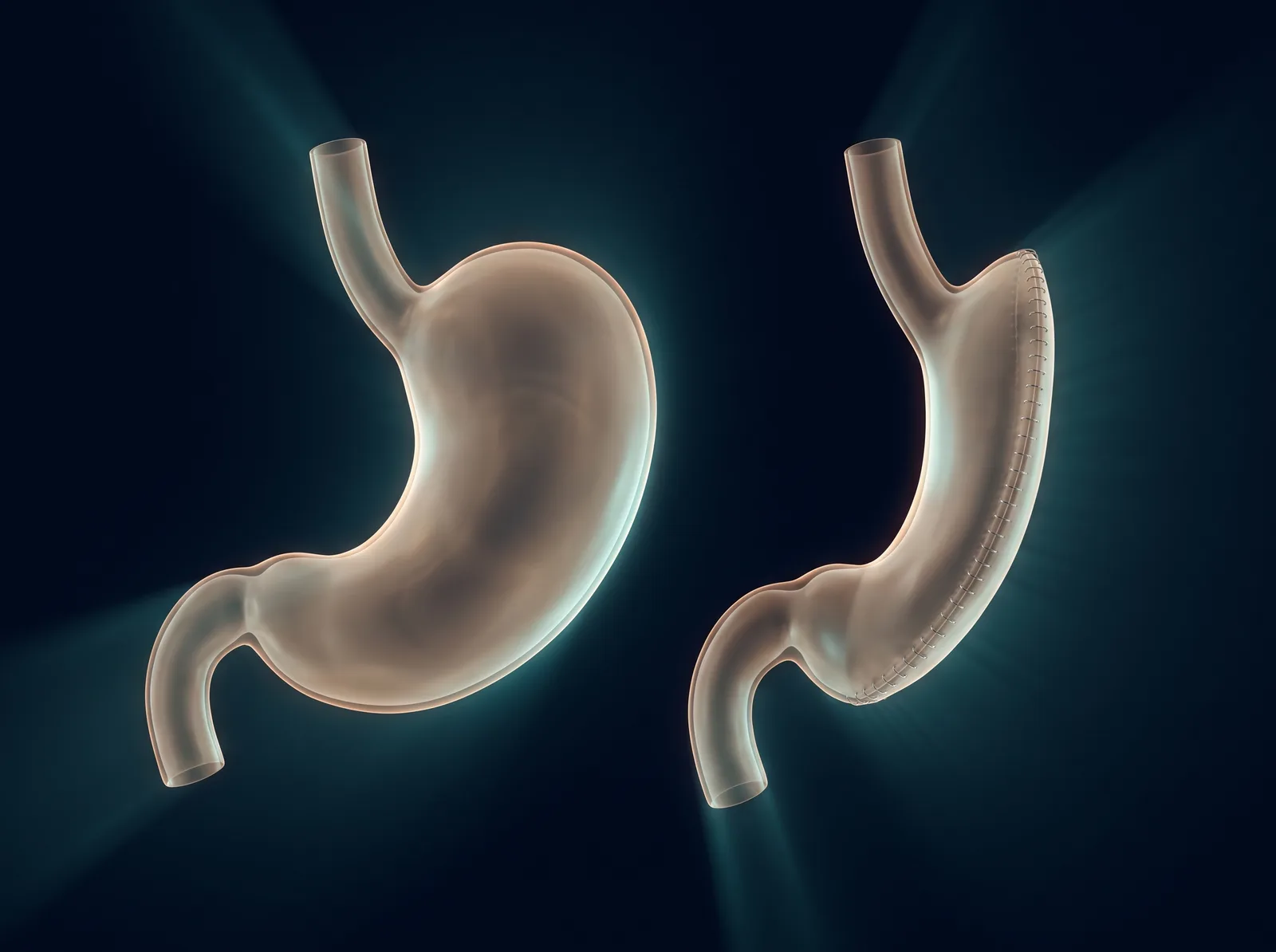
What the operation does
Sleeve gastrectomy removes roughly seventy five to eighty percent of the stomach, including the fundus, which lowers the hunger hormone ghrelin. The effect is both restrictive and hormonal, not purely mechanical.
Blood sugar control often improves early after some metabolic procedures, before BMI has changed much, which points to gut hormone effects in addition to the change in intake itself.
Why it is framed as metabolic surgery
The naming matters. This is not a cosmetic procedure and it is not a shortcut. It is an operation performed to treat chronic metabolic diseases that are driven by physiology.
Evaluate and treat the person. Address and improve the symptoms. The number on a scale is a downstream measurement. Blood sugar control, blood pressure, liver health, sleep quality, and joint load are the outcomes worth tracking, and they are what the operation is aimed at.
Metabolic surgery may improve type 2 diabetes and high blood pressure in some patients. Results vary.
Who is considered a candidate
Candidacy follows established criteria that consider your metabolic picture, other medical conditions and co-morbidities, other metabolic treatments, surgical history, and your medical fitness for an operation. It is not decided by one measurement or medical issue alone.
A comprehensive evaluation will be discussed with you in detail, and designed specifically for your individual medical history, as well as prior authorization requirements. This may include laboratory work, an assessment of possible acid reflux, an upper endoscopy or other imaging, as indicated. Appropriate nutrition and psychiatric counseling evaluations and education are included, as well as a discussion regarding possible alternatives. These may include non-surgical treatments and endoscopic options.
Acid reflux is one of several important factors considered during the pre-operative evaluation period. Current data does not support the idea that a sleeve gastrectomy will automatically worsen or produce significant acid reflux, or that the presence of acid reflux automatically indicates the need for gastric bypass. The full evaluation and any indicated procedure will be discussed in detail, and decided upon, by you and your surgeon together.
The operation itself
The procedure is performed laparoscopically through several small incisions, or with a robotic platform, which is discussed separately. Instruments and a camera pass through those ports, so the abdomen is not opened with a large incision.
The stomach is freed along its outer curve, a narrow tube is created along a sizing guide, and the separated portion is removed. The staple line is inspected carefully before finishing. The removed portion does not grow back, which is what makes the change permanent.
Recovery and the weeks after
Hospital stay and walking after surgery are guided by your recovery and your care team. Early mobilization is one big way patients can reduce the risk of preventable complications. Pain is managed with a plan that limits reliance on opioids.
Diet advances through clear liquids, full liquids, soft foods, and then regular textures over several weeks. Protein targets and hydration come first, and small frequent intake replaces large meals permanently. Lifting restrictions apply while the abdominal wall heals, and they are given specifically rather than generically.
Follow up is part of the treatment
Vitamin and mineral supplementation and lab monitoring is recommended to continue for life after any bariatric procedure. Specific vitamins and minerals will be discussed with your surgeon and may include a multivitamin, calcium, vitamin D, vitamin B12, and iron, all monitored through periodic blood work. ESG carries a lower malabsorption risk but still requires nutritional counseling and monitoring.
A rapid drop in BMI from any cause can increase new gallstone formation, particularly in the first year. Routine removal of a healthy gallbladder at the time of a bariatric operation is not recommended. Removal at the same time is appropriate only when the gallbladder is already causing symptoms.
Follow-up visits are frequent in the first year so that patients are supported and guided through recovery. In addition, patients are strongly encouraged to continue follow-up thereafter at increasing time intervals. Laboratory monitoring, nutritional support, and psychiatric support, as well as management of your metabolic conditions, should continue. Medication for diabetes and blood pressure often needs adjusting, sometimes quickly. Follow-up with your primary care physician is strongly encouraged immediately following surgery and ongoing, in addition to your surgeon.
This page is educational information, not medical advice. What is right for you is decided in consultation, after a review of your history, your symptoms, and your testing.
Common questions
- Is the removed portion of stomach replaceable?
- No. It is permanently removed.
- Will I need vitamins for life?
- Ongoing vitamin and mineral supplementation and lab monitoring is strongly recommended following any bariatric procedure.
- Can a sleeve make acid reflux worse?
- Current data does not support that a sleeve gastrectomy will automatically worsen or produce significant acid reflux, or that the presence of acid reflux automatically indicates the need for gastric bypass.
- How is this different from ESG?
- Sleeve gastrectomy removes part of the stomach through small abdominal incisions. ESG folds the stomach, decreasing the volume it can hold, by suturing from within the stomach, removing no tissue. ESG and sleeve gastrectomy differ in invasiveness, expected weight loss, risks, reversibility, and follow-up needs.
Related procedures and conditions
Next step
An operation for a disease, evaluated properly before it is scheduled.
Request for InformationLast reviewed