
Evaluation and treatment
Acid Reflux
Reflux can be overlooked, particularly when symptoms are atypical. Many people living with it have never had a full workup. They have had a prescription, and then another one. I do the evaluation first, find out what is actually happening, and then treat that. Sometimes the answer is an operation. Often it is not.

Diagnostic Evaluation
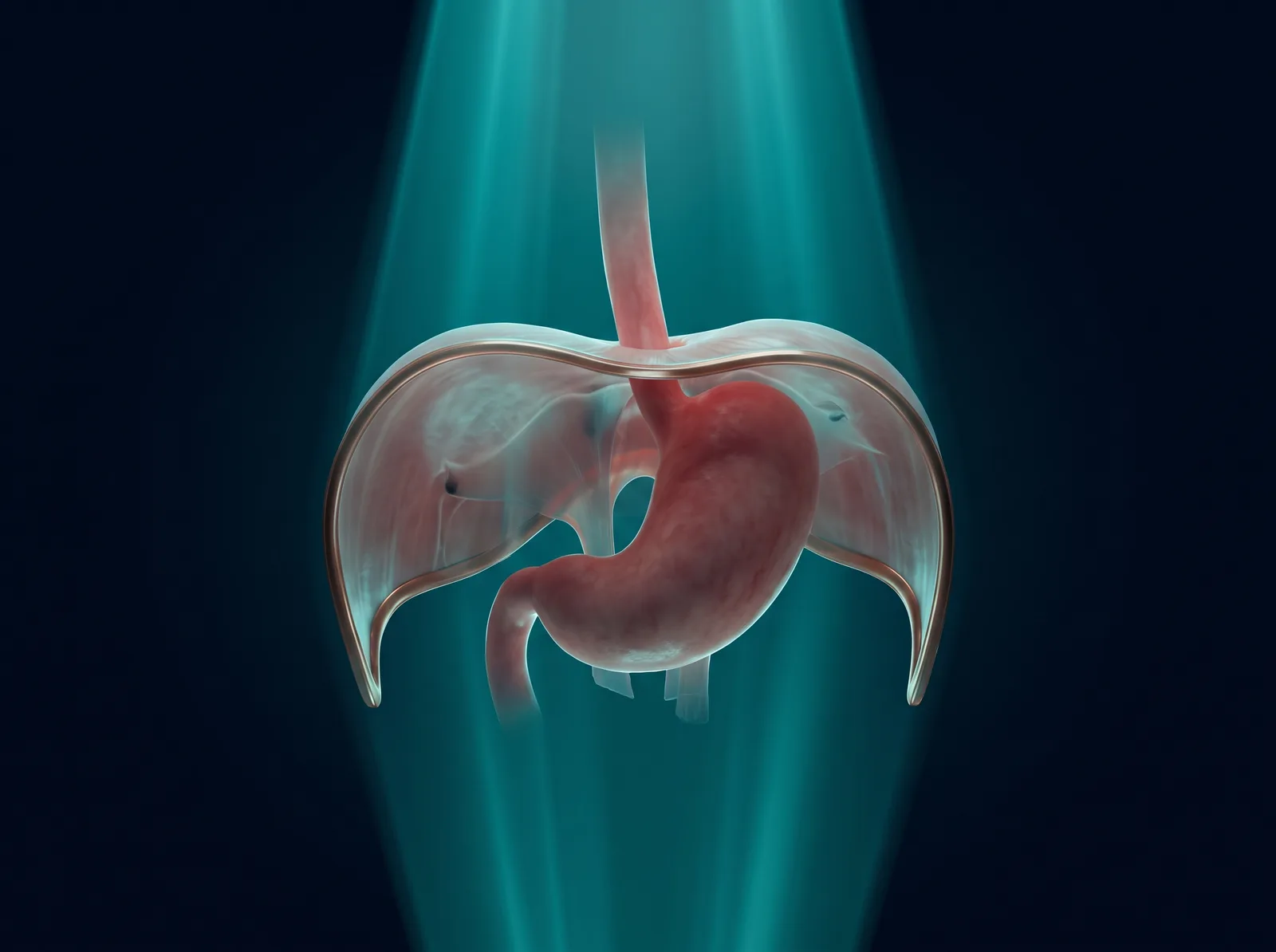
Our approach emphasizes objective evaluation before procedural treatment is recommended. Acid reflux can look the same from the outside no matter what is causing it. Objective testing is sometimes needed to clarify the diagnosis and guide treatment.
The workup answers three questions in order. What does your anatomy look like. How well does your esophagus move. Is acid actually coming up, and how much.
Anatomy first. An upper endoscopy lets me look directly at the lining of your esophagus and stomach. I can see irritation from acid, a narrowing, a hiatal hernia, or changes in the lining that need to be watched. Imaging of the anatomy is added when it will change the plan.
Then motion. Your esophagus is a muscle. It has to squeeze in a coordinated way to move food down. If it does not, some treatments become the wrong choice. Manometry measures that motion.
Then acid. A pH study records how often acid reaches your esophagus and for how long. Some people feel very little and have heavy acid exposure. Others feel a great deal and have almost none. Both of those results change the treatment.
Not everyone needs every test. I will tell you which ones I am recommending for you and what each one is going to answer.
Bravo pH Monitoring
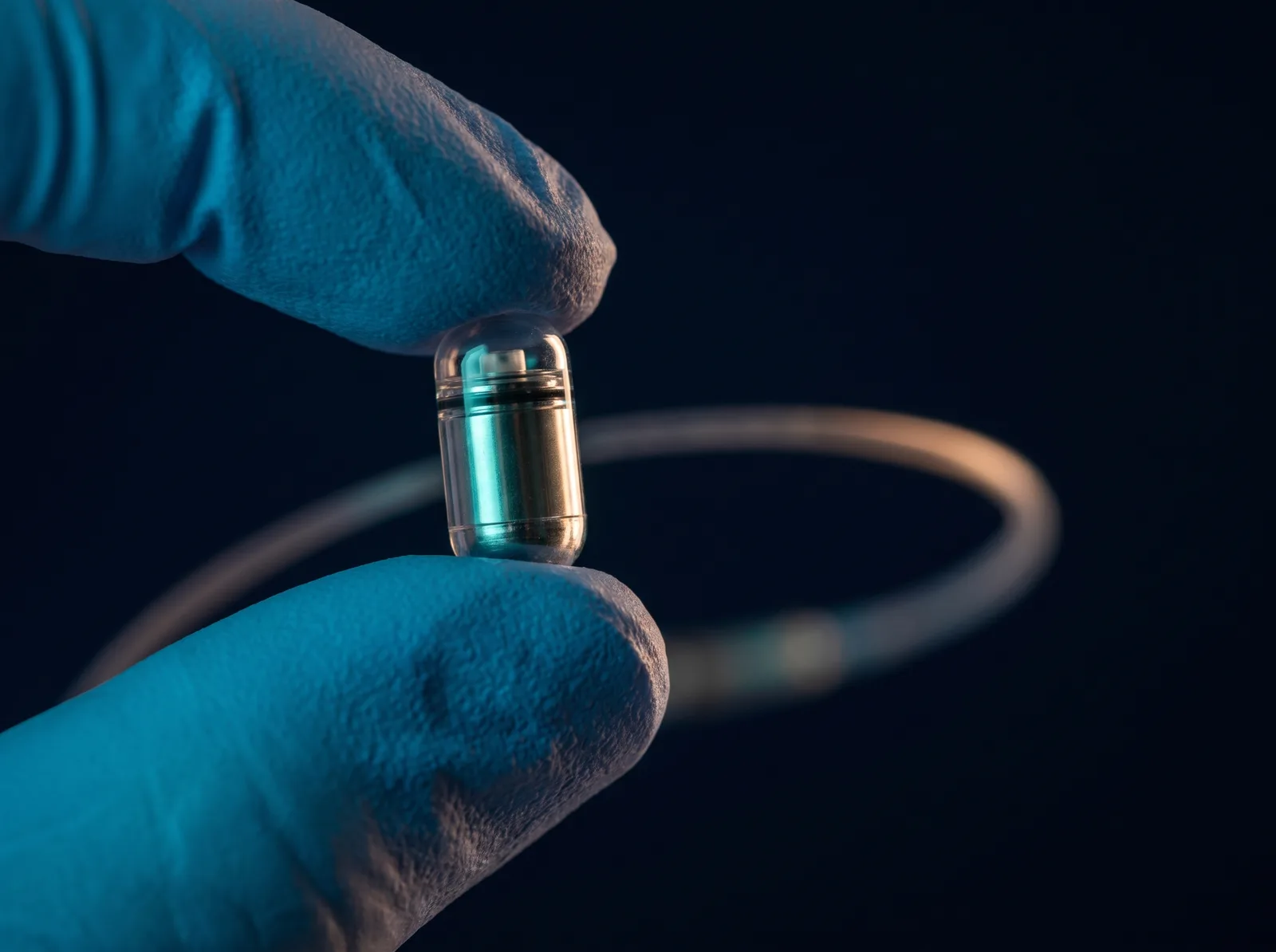
This study measures acid. A small wireless capsule is attached to the wall of your esophagus during an endoscopy. It reads how acidic that spot is, over and over, while you go about your normal days.
There is no tube in your nose and no wire taped to your face. The capsule sends its readings to a small recorder you carry with you. You eat normally, sleep in your own bed, and go to work. That matters, because a study done while you are lying still in a lab does not reflect your real life.
You keep a simple log of when you eat, when you lie down, and when you feel symptoms. That log is how we match what you feel to what the capsule measured. It is often the most useful part of the study.
The capsule detaches on its own and passes through your body. Nothing has to be taken out.
When the recording is done, I have a real number for how much acid your esophagus is exposed to and whether your symptoms line up with it. That is what tells us whether acid is the problem, and whether treating it harder is going to help.
Esophageal Manometry
Manometry measures muscle. A thin flexible catheter is passed through your nose into your esophagus, and you take small sips of water. Sensors along the catheter record the pressure of each squeeze as it travels down.
That tells me two things. Whether your esophagus moves food along with a normal, coordinated wave, and whether the valve at the bottom relaxes and closes the way it should.
This is why the study matters before any repair is considered. A repair tightens the area where the esophagus meets the stomach. If the esophagus is not squeezing well, tightening that area can leave you with trouble swallowing instead of relief. I want to know that before we make a decision, not after.
The study takes a short time in the office. You are awake for it. It is not comfortable, and I will not pretend otherwise, but it is brief and it changes what we do.
Anti-Reflux Procedures
We match the therapy to the cause.
Medical. Medication and targeted changes to how and when you eat. For some people this is the whole answer.
Endoscopic evaluation. A scope is passed through the mouth, with no incisions, to evaluate the anatomy and guide the plan. Endoscopy is used to evaluate reflux, not to treat it.
Surgical. When the anatomy is the cause, the repair addresses the anatomy. That usually means repairing a hiatal hernia and then restoring the valve, either with a fundoplication, where the top of the stomach is wrapped around the lower esophagus, or with a LINX device, a small ring of magnetic beads placed around the valve.
Which one fits is a conversation between us. Your testing, your anatomy, your swallowing, and what you want out of treatment all sit on the table, and you get the reason behind the recommendation in language you can repeat to your family. If the testing says an operation will not correct your problem, you will hear that from me.
What it is
Reflux means stomach contents move back up into the esophagus, the tube that carries food from your throat to your stomach. Stomach acid belongs in the stomach. The esophagus is not built for it.
Heartburn is the symptom people expect. Some people do not get it. Reflux also shows up as a cough that will not quit, a hoarse voice, a lump in the throat, chest pain, trouble swallowing, dental problems, disrupted sleep, or asthma that keeps flaring. That is part of why it gets missed for years.
Underneath the symptoms there is usually a mechanical reason. The valve between the esophagus and the stomach may not close properly. Part of the stomach may have moved up through the diaphragm, which is called a hiatal hernia. The esophagus may not be moving food along the way it should. These are different problems. They need different treatments. You cannot tell them apart by how the symptoms feel.
There is one more thing worth saying plainly. Reflux and metabolic conditions can coexist and may influence symptoms, eating patterns, sleep, and treatment planning. When eating hurts, when swallowing is hard, when sleep is broken night after night, your eating and your energy can shift. That is why these two sides of the practice belong together.
Who it is for
People who have been on acid-reducing medication for a long time and still have symptoms, or who do not want to stay on it indefinitely.
People whose symptoms come back the moment they stop medication. That is information, not failure.
People with symptoms that were never connected to reflux, including throat clearing, chest pain that has been cleared by cardiology, or sleep that is wrecked by lying flat.
People with a known hiatal hernia, and people who have had reflux surgery before and are still having symptoms.
People being evaluated for metabolic surgery. Reflux changes which procedure is the right one, so it has to be understood first.
Reflux affects more men than women. I mention that because men are less likely to be evaluated for it and more likely to live with it for years, and because a lot of people assume this is not a problem that applies to them.
What to expect
The conversation. We start with your history. What the symptoms are, when they started, what makes them worse, what you have taken and what it did. This part matters more than people expect.
The workup. Testing as described under Diagnostic Evaluation above, chosen for your case.
The plan. We sit down with the results and choose from the options described under Anti-Reflux Procedures.
After. We follow up to see whether the treatment did what it was supposed to do, and adjust if it did not.
Common questions
Ready to talk it through?
Request a consultation and we will respond within one to two business days.
Request for Information